
Permits parking trails waterfalls and camping
By Travel by Deen | Updated October 17, 2026
Blue-green water, red canyon walls, and waterfalls make Havasupai a remarkable place to explore. But reaching it takes planning. You need a reservation, a way to reach the remote trailhead, and enough energy for a long hike with your gear.
This guide explains how to plan your visit, where to park, how to reach Supai Village, and what to expect at the campground and waterfalls. Give yourself time to enjoy the canyon instead of trying to fit every trail into one trip.
Where is Havasupai
Havasupai is on the Havasupai Indian Reservation in northern Arizona. Supai Village and the main visitor area are on tribal land outside Grand Canyon National Park. The Havasupai Tribe manages access and sets the visitor rules. A national park pass does not replace a Havasupai reservation.
Havasupai means “people of the blue-green waters.” This is the home of a living community. Stay on visitor trails and follow local instructions throughout your trip.
How to get a Havasupai permit
Book through the official Havasupai Reservations website before traveling. Overnight reservations are required, and day hiking is not allowed. The standard booking is four days and three nights. Choose either the campground or the lodge.
Make your reservation here: www.havasupaireservations.com
For 2026, a campground permit costs $455 per person for three nights. A lodge booking costs $2,277 per room for three nights and covers up to four people. Transportation, meals, and gear are additional expenses. These are 2026 prices, not a quote for future seasons.
- Create your account on the official website and check available dates.
- Review the dates, guest count, and total cost before paying.
- Name an alternate trip leader during booking if needed. The original leader or a listed alternate must check in with matching photo ID.
- Save your confirmation and check the official notices again before leaving home.
Do not buy a permit from a stranger or a social media resale post. The current rules prohibit public resale and transfers. For cancellations at least 90 days before arrival, the published policy offers a 50% permit-fee refund, excluding early-access fees. Cancellations inside 90 days are not refundable. The official pages differ on the cancellation method, so follow the current account instructions and confirm with support.
Check in before driving to the trailhead
Check in at the tourist office at Grand Canyon Caverns & Inn on Route 66, either on your arrival date or the day before. Bring photo ID, booking details, and vehicle plate numbers. Collect wristbands, gear tags, and the parking permit. Checking in the day before makes an early start easier. Confirm office hours before traveling.
Getting to Hualapai Hilltop and parking
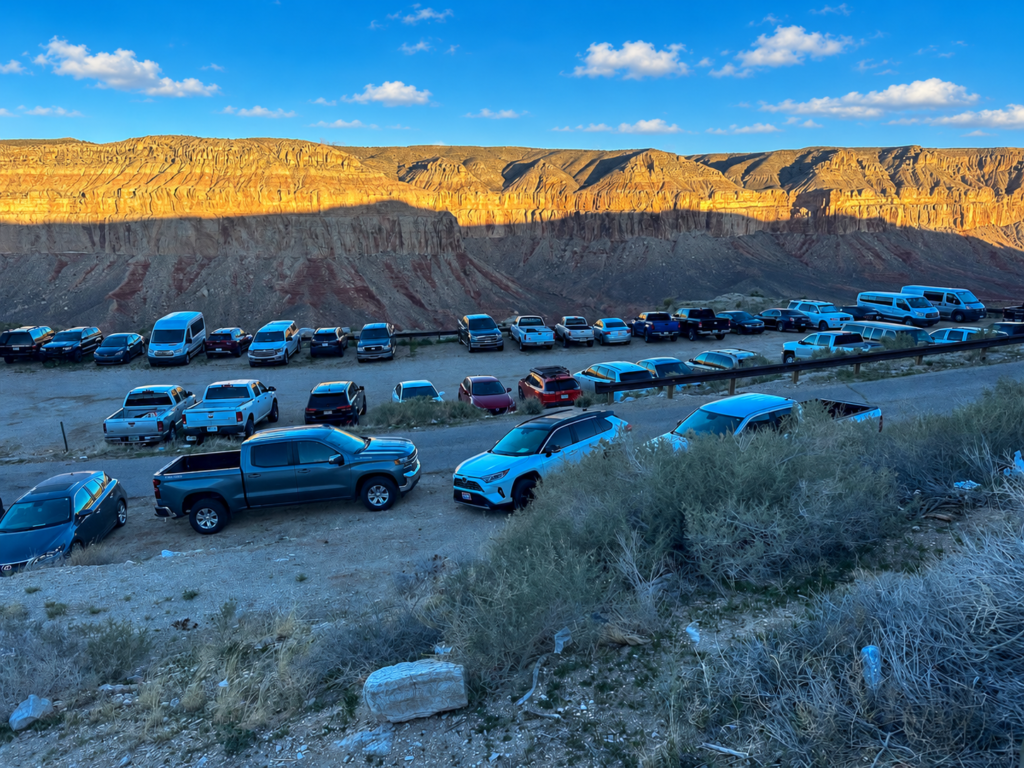
Hualapai Hilltop is the trailhead and parking area. Drive from Route 66 onto Indian Road 18 and follow it roughly 60 miles to the end. Allow at least 90 minutes for this final stretch. The road is paved, but livestock and wildlife may cross it. Fill your fuel tank before leaving the towns along Route 66.
You cannot drive into Supai Village. Arrange your own vehicle or a confirmed private ride to Hilltop; the Tribe currently lists no public transportation to the trailhead. Do not count on finding a last-minute ride back.
Parking is limited. Register each vehicle at check-in and display its permit. Use visitor parking, not the tribal-member area near the helipad. Roadside parking must leave the road clear. A distant spot adds walking before the hike even starts. Lock the vehicle and keep valuables out of sight.
Car camping and other camping at Hilltop are prohibited. Arrange a permitted overnight stay before your hike. There is no fuel or food service at Hilltop, so finish your shopping before arriving.
Ways to reach Supai Village
Hiking
Hiking is the option to plan around. It is about 8 miles one way from Hilltop to Supai Village, then another 2 miles to the campground entrance. Your campsite may be farther along the creek. A camping trip therefore involves roughly 20 miles of hiking in and out before adding waterfall walks.
Train with the backpack and footwear you will use. Practice longer walks on uneven ground, and make sure your shoes leave room for your feet to swell. Blisters can turn the return climb into a very slow day.
Helicopter
The published tourist fare is $300 per person each way, including one personal pack. Extra bags cost more. Flights are sold at the landing zone on the day of travel, with no advance booking. The listed operating days are Sunday, Monday, Thursday, and Friday, but schedules and tourist availability can change. Other travelers have priority over tourists.
The flight connects Hilltop and Supai Village. Campers still walk about 2 miles to the campground. Do not rely on a helicopter to make a trip possible if you cannot manage the hike. Leave extra time after your visit rather than scheduling a tight flight connection.
Pack mules and saddle horses
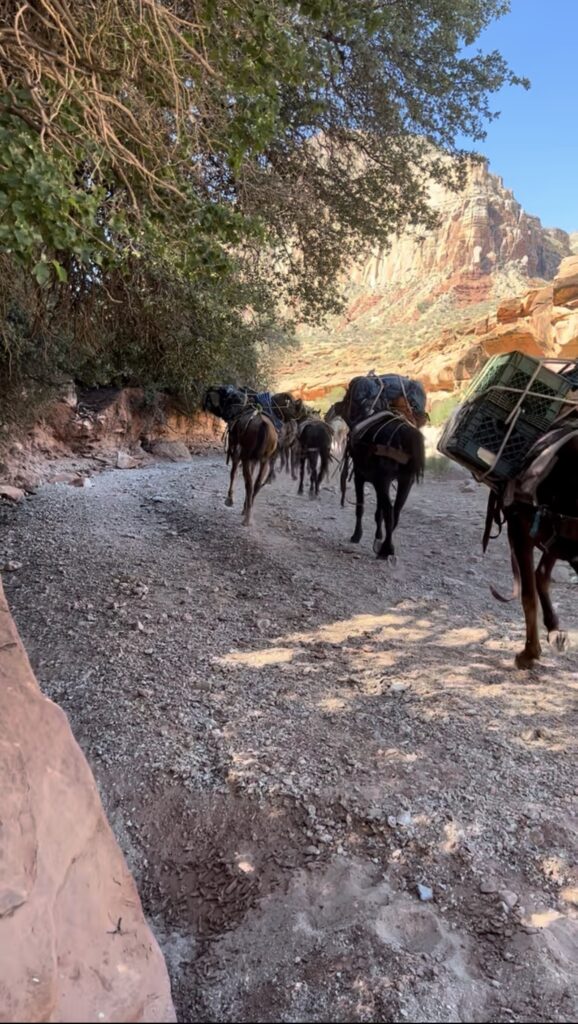
Pack mules carry luggage; they are a separate service from riding a horse. At the time of this update, an official announcement says no new pack-animal reservations are being accepted, while existing reservations will be confirmed at check-in. Other official pages still show general booking information. Confirm availability directly before planning around this service.
If you already have a mule reservation, confirm bag limits and drop-off times. The official pages differ on these details. Keep water, food, medication, and other essentials with you because transported bags may arrive much later.
The terms mention saddle horses on a case-by-case basis, subject to availability. Treat this as an option that needs direct confirmation, not a guaranteed trailhead service.
The main hiking trail
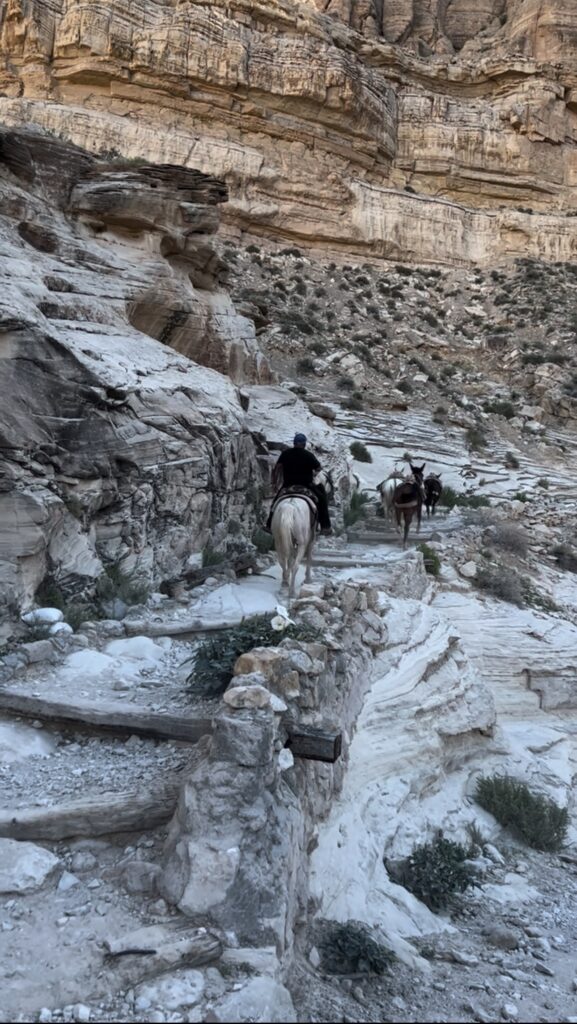
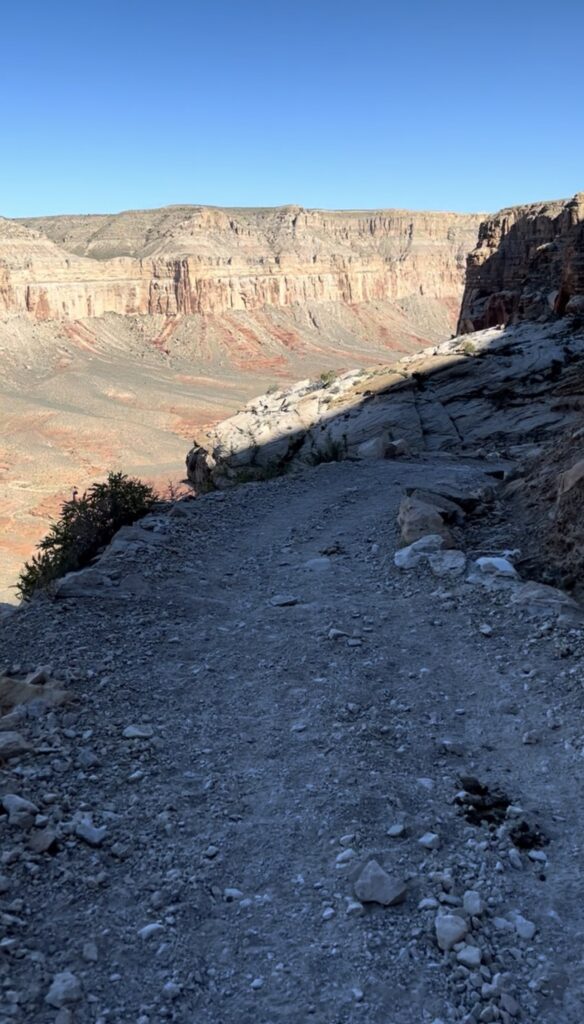
The trail starts with steep switchbacks down from Hilltop. Farther into the canyon, the walking becomes less steep, but sand, stones, sun, and a loaded backpack can still make it tiring. Stay on the marked visitor route instead of following side canyons.
The hardest section on the return comes near the end, when you climb back to Hilltop. Save energy for this climb. Start during the coolest permitted part of the day and check current trail access times with staff. There is no water supply along the approach trail, so carry enough for the full hike.
Allow most of the day for hiking in or out. A planning estimate of 5–8 hours each way may suit some hikers, but heat, pack weight, breaks, and fitness can make the trip longer. It is an estimate, not a deadline.
Give horses and mules space to pass. Move toward the canyon-wall side where safe and follow the handler’s directions. Avoid sudden movements.
Supai Village
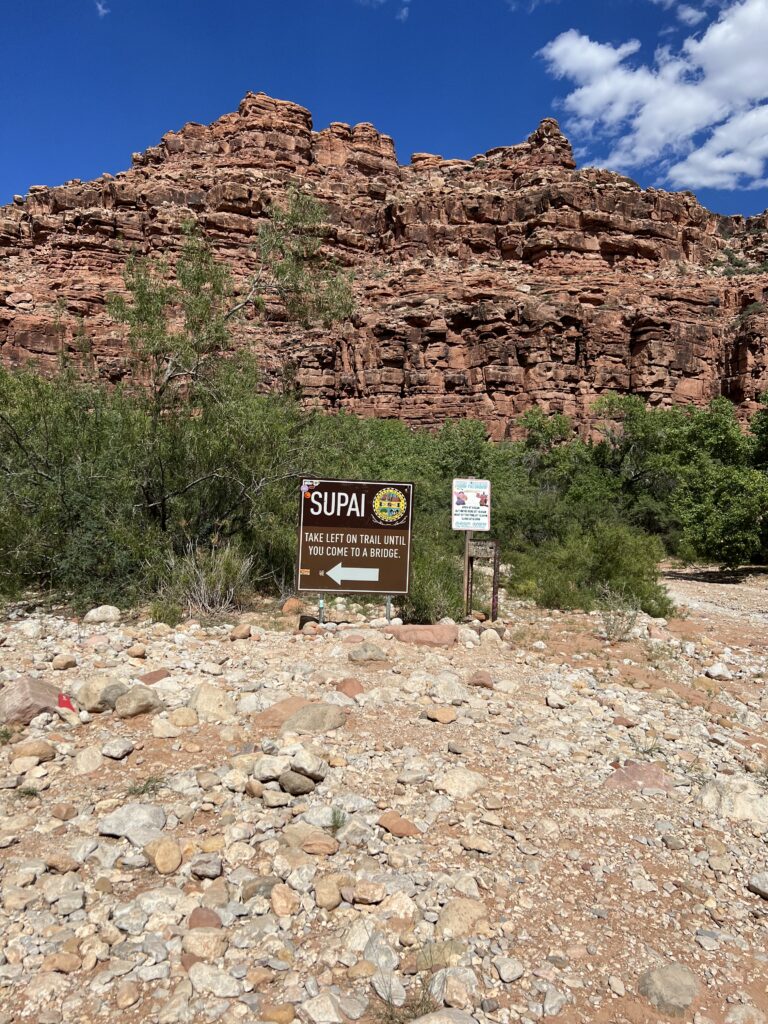
Supai Village is the main community along the route. The lodge is here, and a store and café offer limited visitor services. Opening hours and supplies can vary, so carry the meals and essentials you need rather than depending on a full grocery shop.
For campers, reaching the village is a good time to pause and check how everyone feels before continuing toward the falls. Lodge guests have a shorter arrival hike, but walking to Havasu Falls and back adds roughly 4 miles to an outing.
Keep your visit to the main visitor route. Homes and residential paths are private. The Tribe prohibits photos and videos in the village, and commercial filming and drones are also prohibited. Enjoy the community respectfully without treating it as a photo stop.
The waterfalls of Havasupai
The main falls follow Havasu Creek. Moving downstream from Supai, you reach the upper waterfalls, Havasu Falls, the campground, Mooney Falls, and then Beaver Falls. Floods can reshape pools and access paths, so old photos and maps may not match current conditions.
Fifty Foot Falls
Fifty Foot Falls is in the upper waterfall area between Supai and the campground. It is worth allowing time for this area instead of walking straight past it. Use only routes that staff identify as open; avoid pushing through vegetation to find an old viewpoint.
Little Navajo Falls
Little Navajo Falls is also between the village and Havasu Falls. You may see it called Lower Navajo or Rock Falls in other guides. The waterfall landscape changed after the 2008 flood. Ask about present access instead of assuming an older swimming spot is still suitable.
Havasu Falls
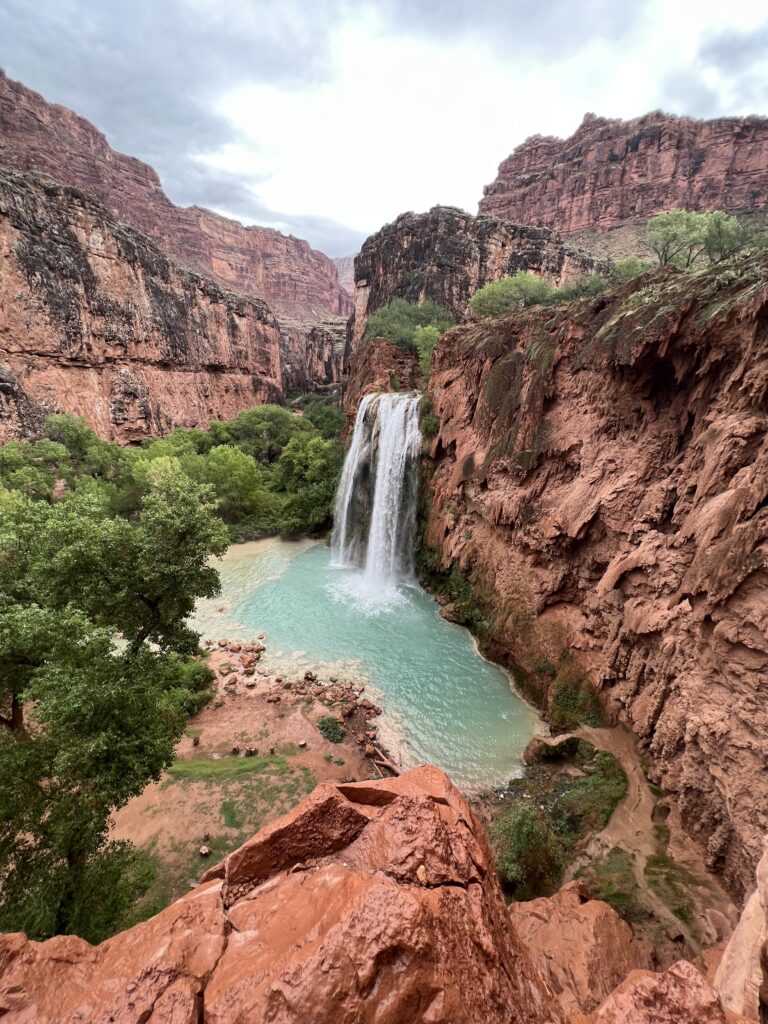
Havasu Falls is the best-known waterfall in the area, with blue-green water dropping beside red canyon walls. It sits close to the campground entrance, making it a convenient place to spend a relaxed morning or afternoon.
Allow time to sit and enjoy the view. If swimming is allowed and conditions are calm, choose an easy entry point and stay away from the falling water and strong currents. Never jump or dive into the pools.
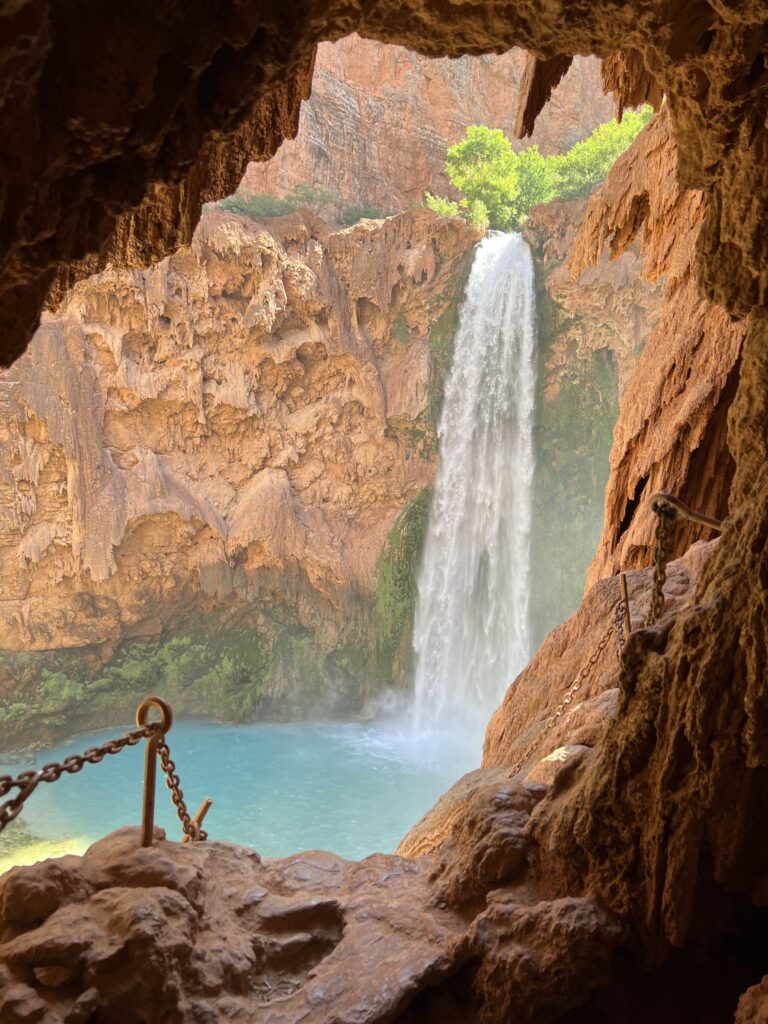
Mooney Falls
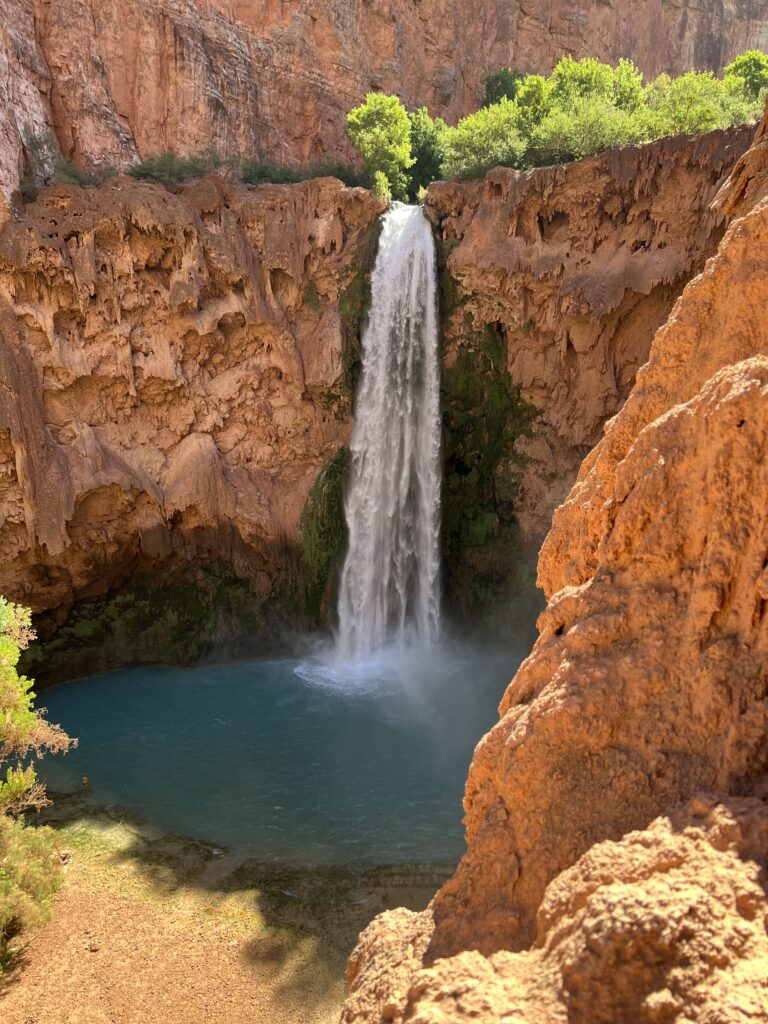
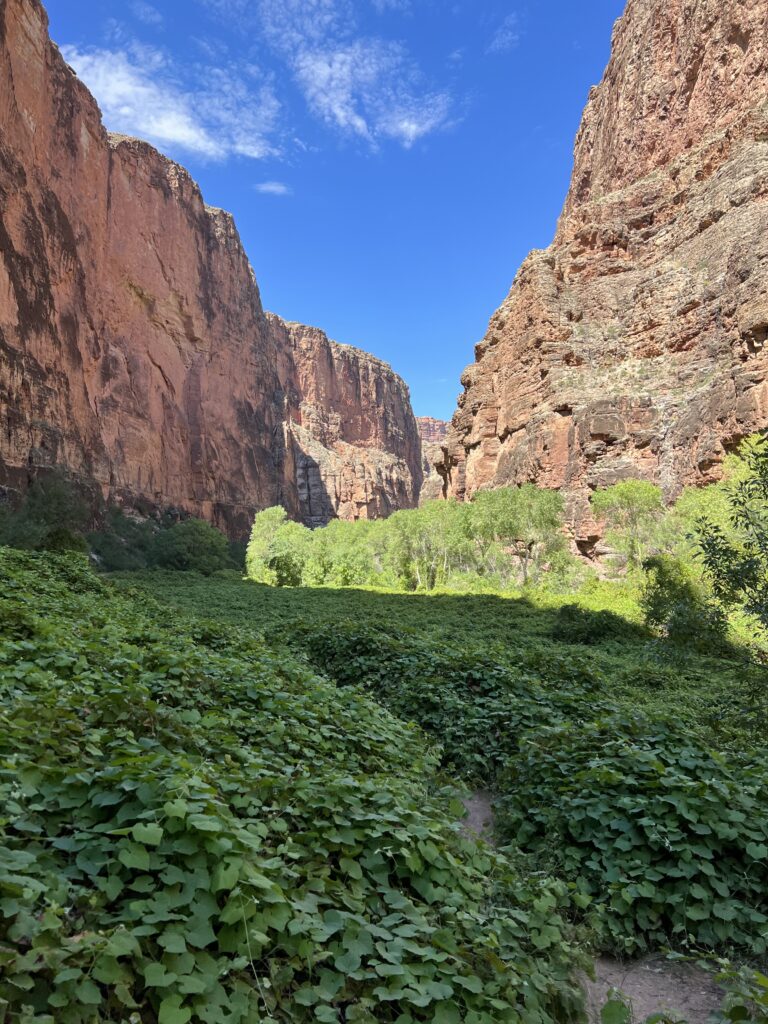
Mooney Falls is beyond the campground. Reaching its base involves an exposed descent through rock openings and down chains and ladders. Spray can make the route slippery. This is a serious climb, especially for anyone uncomfortable with heights.
You can choose to enjoy the upper area without descending. If you go down, remember that you must climb back up. Keep your hands free and allow space for other people. The Tribe warns that this descent is extremely treacherous; the area beyond Mooney is open only in daylight.
Beaver Falls
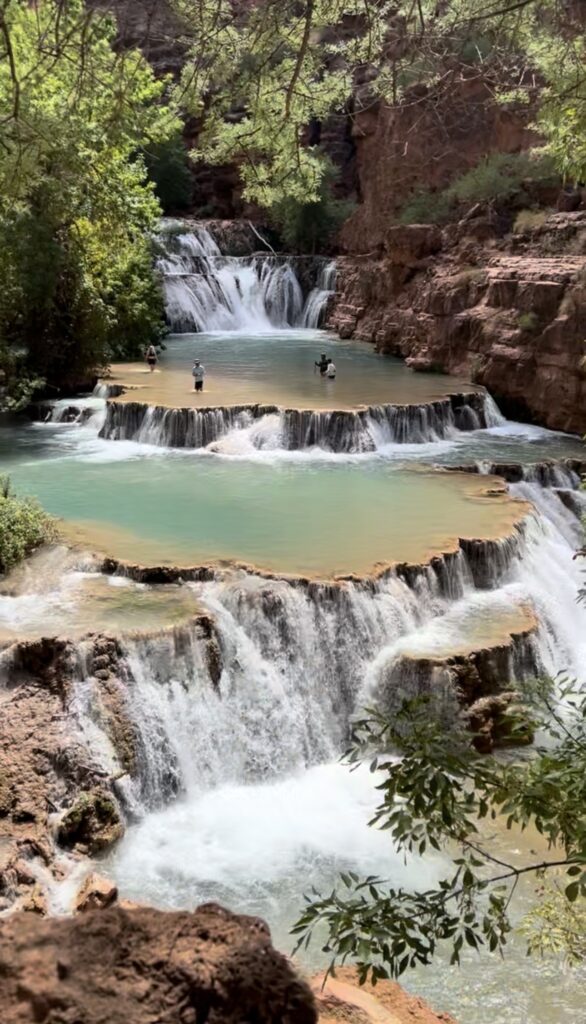
Beaver Falls has a series of smaller cascades and pools farther downstream. Getting there involves the Mooney descent, uneven trails, creek crossings, and more climbing. Plan roughly 6–8 miles round trip from the campground, depending on your campsite and the open route.
This is a full outing, not a quick walk after lunch. Carry food and water, check the weather, and set a turnaround time that leaves plenty of daylight for the return. Skip it if you are tired or uncertain at Mooney.
Camping beside Havasu Creek
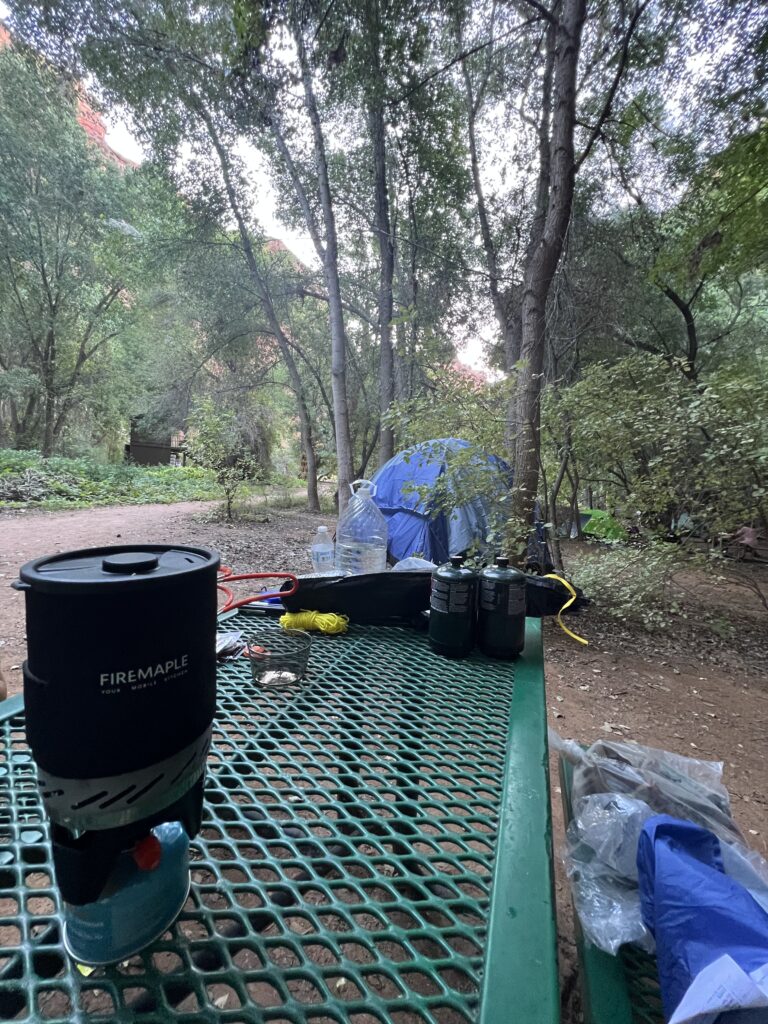
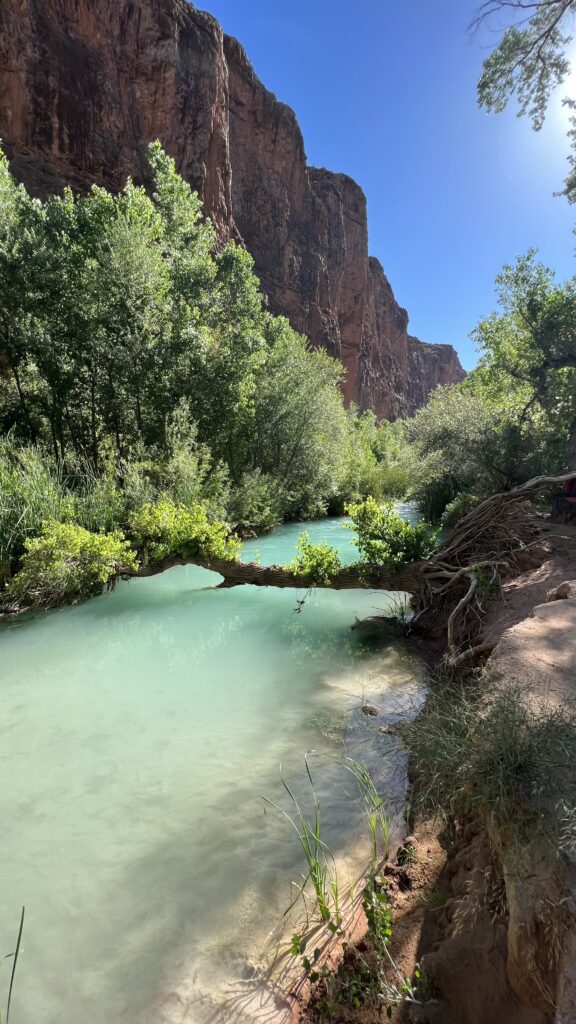
The campground stretches along the creek between Havasu and Mooney Falls. Sites are first come, first served within the designated area. Look for an established space that fits your tent without blocking trails or access to the water.
Expect basic camping. There are composting toilets and some picnic tables, but no showers. A spring provides water; bring a filter and follow current water notices. Do not assume untreated creek water is safe.
Choose a site with a clear route to higher ground and avoid setting up where water could trap you. Keep your camp compact, and leave enough room for neighboring campers. Put food and trash in a sturdy, animal-resistant container instead of leaving them in your tent.
Pack out everything you bring, including food scraps, used gear, and fuel canisters. Campfires are prohibited; small backpacking stoves are allowed under the published terms. Keep soap and dishwater out of the creek, even when the soap is labeled biodegradable.
Other places to enjoy
Havasu Creek and the canyon views
You do not need to reach every waterfall to enjoy Havasupai. Spend time beside the creek in open visitor areas, watch the light change on the canyon walls, and leave room in your schedule for rest. Some of the most enjoyable moments may be close to camp.
The Colorado River confluence
Farther downstream, Havasu Creek meets the Colorado River. This is a much longer and more demanding trip, commonly estimated at about 17–18 miles round trip from the campground. It includes the Mooney route and continues beyond Beaver Falls.
Treat the confluence as an advanced extension that needs separate planning. Confirm current access and conditions, carry navigation and enough supplies, and allow a full day. For a first visit, concentrating on the main waterfalls gives you more time to enjoy them. Do not enter the Colorado River.
A simple four day itinerary
Before your permit starts
Travel to the area, complete check-in if the office is open, organize your pack, and sleep in a permitted place. Fill your fuel tank and prepare food and water for the next morning.
Day 1 Hike to camp
Drive to Hilltop, park, and hike through Supai to the campground. Choose your campsite, refill and treat water as needed, and rest. Visit nearby Havasu Falls only if you still have energy.
Day 2 Mooney and Beaver Falls
If conditions and fitness allow, explore Mooney and continue to Beaver Falls. Turn back early enough to return in daylight. Staying near Havasu Falls is a good alternative if you do not want to use the chains and ladders.
Day 3 Upper waterfalls and a slower afternoon
Visit the open upper waterfall areas, then spend more time near Havasu Falls or camp. Prepare for the return hike before bed and keep your final evening simple.
Day 4 Hike back to Hilltop
Leave early enough to avoid the worst heat, while following current access instructions. Take steady breaks and save water and energy for the final climb. Avoid a long drive immediately afterward if you are exhausted.
What to pack
- A comfortable backpack, lightweight tent, sleeping pad, and sleeping bag suited to the forecast.
- Broken-in hiking shoes, spare socks, blister supplies, and secure water shoes for creek crossings.
- Water bottles or a reservoir, a filter, meals, snacks, and animal-resistant food storage.
- A sun hat, sunscreen, light layers, rain protection, and a warm layer for cool evenings.
- A headlamp, first-aid kit, offline map, power bank, and bags for all your trash.
- Photo ID, reservation details, and the wristbands and tags issued at check-in.
Keep your pack light enough to carry for hours. Test the fully packed bag on a local hike before your trip.
Weather and safety
For a first visit, consider cooler periods in spring or fall if permits are available. Summer temperatures can exceed 100°F, making the exposed approach especially hard. Cooler weather can also mean cold nights, so check both daytime highs and overnight lows.
Flash floods can happen even when it is not raining where you stand. Summer monsoon weather increases the risk. Follow closures and staff directions, and move to high ground if floodwater approaches. Do not enter narrow canyon sections during rain or flooding.
Do not jump from waterfalls or assume a pool is deep enough for diving. Rocks may be hidden below the surface. There are no public medical facilities for visitors in Supai, and evacuation can be delayed and expensive.
Tell someone at home your route and expected return time. Download your information before arriving, and consider a satellite communicator. Plan the trip around the slowest person in your group and leave optional hikes optional.
Plan a trip you can enjoy
Book your permit first, prepare for the walk, and give yourself enough time at the waterfalls. A relaxed afternoon beside Havasu Creek can be just as memorable as a long hike to Beaver Falls. Arrive prepared, respect the Havasupai community, and leave the canyon as clean as you found it.