
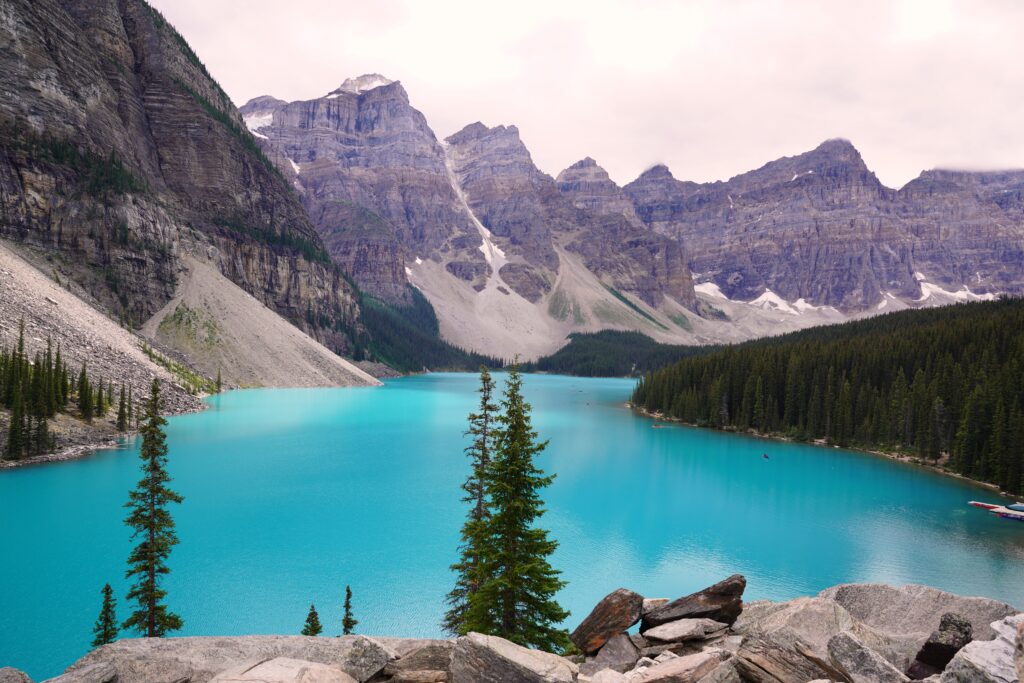
Turquoise lakes ringed by glaciers, elk grazing beside the highway, and a mountain town you can walk end to end in twenty minutes — Banff National Park earns its reputation, but it also punishes visitors who show up without a plan. Moraine Lake Road is closed to private cars. Lake Louise parking fills before 7 a.m. And the most photographed lake in Canada requires a reservation just to see it.
This guide walks you through a summer visit to Banff National Park step by step: what it costs, how to get around, which hikes actually match your fitness level, and where the crowds will wreck your morning if you don’t plan around them. Every fee, date, and rule below comes from Parks Canada and other official sources, checked in August 2026. Park conditions change often, so treat this as your starting point, not your final word.
Banff National Park at a Glance
| Location | Alberta, Canada — Canadian Rocky Mountains |
| Size | Roughly 6,600 square kilometres |
| Established | 1885 — Canada’s first national park |
| Nearest major airport | Calgary International Airport (YYC), about 130–140 km / 1.5–2 hours by road |
| Gateway towns | Banff, Lake Louise, Canmore (just outside the park boundary) |
| Peak summer season | Late June through early September |
| Daily entry fee (2026) | $12.25 adult / $10.75 senior / free for youth 17 and under / $24.50 family or group |
| Free entry window in 2026 | June 19 – September 7, via the Canada Strong Pass — no park pass needed |
| Iconic sights | Lake Louise, Moraine Lake, Banff Gondola, Johnston Canyon, Icefields Parkway |
| Currency | Canadian dollars (CAD) |
| Time zone | Mountain Time |
Why Visit, and Who Banff Suits
Banff earns comparisons to the Swiss Alps for a reason: glacier-carved peaks rise directly from mineral-green lakes, and most of the park’s headline sights sit within an hour of each other. It rewards hikers, photographers, and road-trippers equally — you can spend a morning on a demanding alpine trail and an afternoon soaking in a hot spring without much driving.
It suits families reasonably well on the easier trails and boardwalks (Johnston Canyon, Lake Louise Lakeshore, Bow Falls), and it suits serious hikers who want long alpine days with real elevation gain (Plain of Six Glaciers, Sentinel Pass). It’s less forgiving for visitors who want a spontaneous, unplanned trip — summer Banff runs on reservations, and showing up without one at Moraine Lake or Lake Louise usually means turning back.
Best Time and Season to Visit
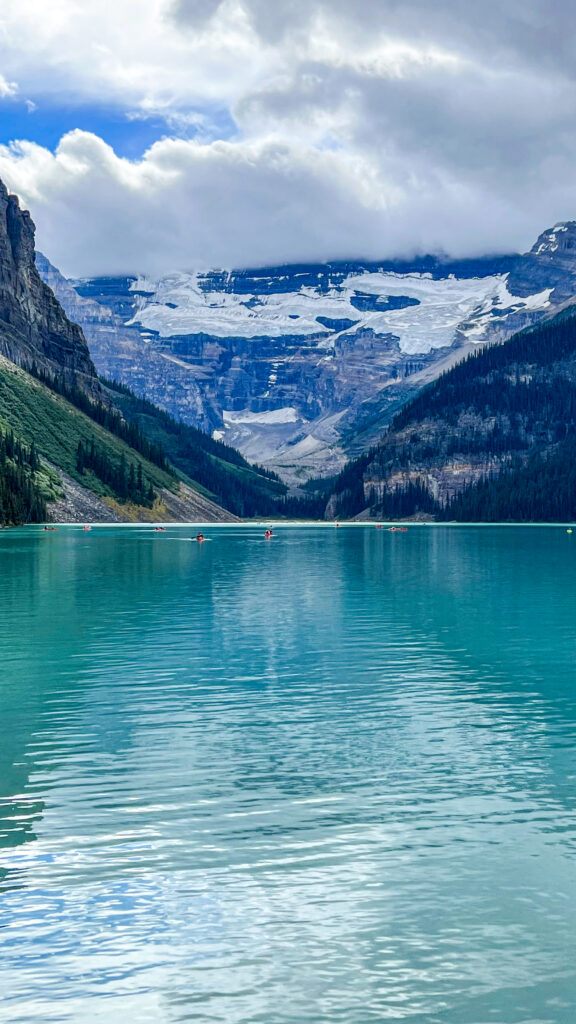
Summer (late June to early September) is Banff’s warmest, driest, and most crowded window, with daytime highs typically in the high teens to low-to-mid 20s Celsius and long daylight hours — sunrise around 5:30–6 a.m. and sunset near 9–9:30 p.m. at the height of summer. This is also when every shuttle, campground, and hotel room is under the most pressure, and when afternoon thunderstorms are most common in the high country.
If your dates are flexible, the shoulder weeks of late June and late August thin the crowds slightly while keeping most services and shuttles running. Moraine Lake Road typically doesn’t open until around June 1, so if you want to see Moraine Lake itself (not just Lake Louise), avoid the first two weeks of June.
How Many Days You Need
- 2 days: A rushed but workable introduction — Banff townsite, one lake, one moderate hike.
- 4–5 days: A comfortable, realistic first trip covering Banff, Lake Louise, Moraine Lake, and a stretch of the Icefields Parkway, with room for one or two proper hikes.
- 7+ days: Enough time to add Yoho or Kootenay national parks next door, tackle a full-day hike like Sentinel Pass, and build in weather backup days.
This guide’s sample itinerary below assumes 5 days, which is the sweet spot for most first-time visitors flying into Calgary.
How to Reach the Park
By air: The closest airport is Calgary International Airport (YYC). It’s roughly 130–140 km to Banff townsite, a drive of about 1.5 to 2 hours on the Trans-Canada Highway.
By car: Renting a car in Calgary is the most flexible option and the one this guide assumes, since so many summer activities require you to reach specific parking areas or shuttle lots early in the day.
By shuttle or bus: Several operators (including Banff Airporter and Brewster Express) run scheduled service from YYC directly to Banff and Lake Louise hotels, generally in the 1.5–2 hour range, with fares commonly in the $60–90 CAD range one-way. This is a reasonable option if you don’t plan to drive within the park and will rely on the Roam Transit local bus system and Parks Canada shuttles instead.
By train: Rocky Mountaineer offers a scenic multi-day rail journey between Vancouver and Banff/Lake Louise, but it’s a slow, premium-priced way to arrive — not a practical airport transfer.
Entrances and Which One to Use
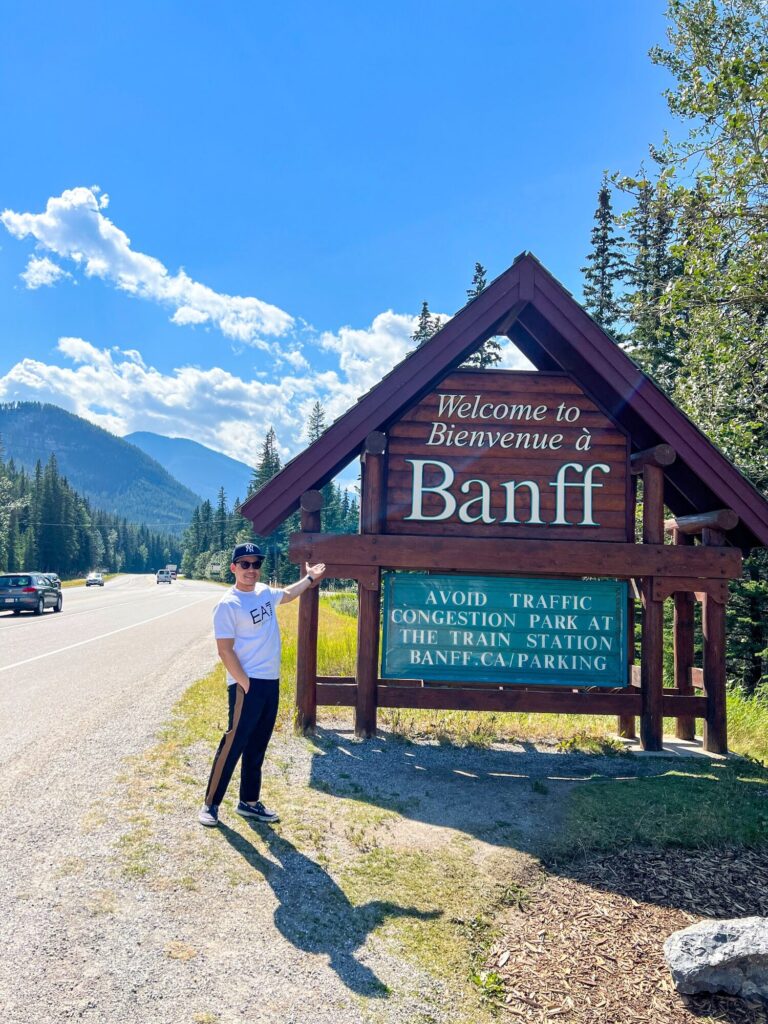
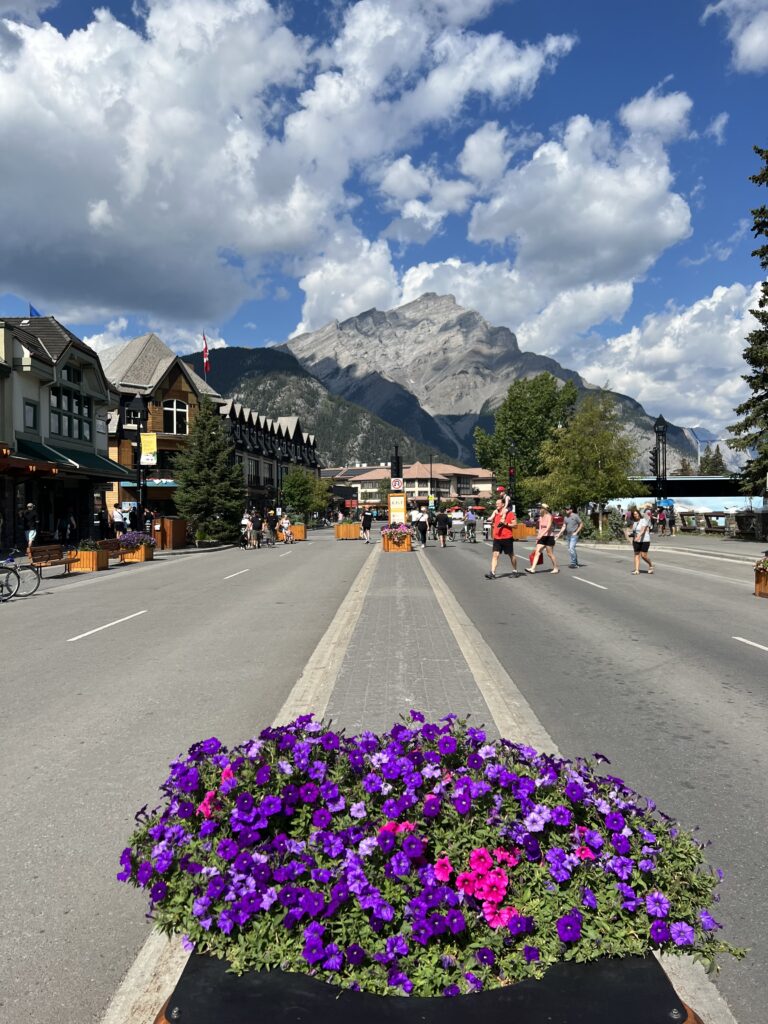
Nearly every visitor enters Banff National Park from the east on the Trans-Canada Highway (Highway 1), passing through the park gates a few kilometres before reaching the town of Canmore and, shortly after, the Banff townsite itself. This is the entrance this guide assumes.
A smaller number of visitors enter from the west via Highway 1 through Yoho National Park (British Columbia side), or approach via Highway 93 South through Kootenay National Park. Both are valid routes if you’re combining Banff with a broader Rockies road trip, but they add significant driving time from Calgary.
Entrance Fees, Passes, Reservations and Permits
Important 2026 update: Under the federal Canada Strong Pass program, admission to Banff National Park is free for all visitors from June 19 to September 7, 2026 — no park pass is required during this window. Outside that window, standard fees apply.
Daily admission (2026 rates, outside the free window)
| Category | Price (CAD) |
| Adult (18–64) | $12.25 |
| Senior (65+) | $10.75 |
| Youth (17 and under) | Free |
| Family/Group (up to 7 in one vehicle) | $24.50 |
Annual Discovery Pass (2026 rates)
| Category | Price (CAD) |
| Adult | $83.50 |
| Senior | $71.50 |
| Family/Group | $167.50 |
The Discovery Pass is valid at more than 80 Parks Canada sites nationwide for 12 months, so it can pay for itself if you’re visiting more than one national park or returning to Banff within the year.
No park pass is required during the free-admission period from June 19 to September 7, 2026. Camping, shuttles, the Upper Hot Springs pool, and other paid services still require separate reservations and fees. The Canada Strong Pass includes a 25% discount on eligible Parks Canada camping and overnight stays during this period.
Reservations you may need to book ahead
- Parks Canada shuttle to Lake Louise/Moraine Lake — required if you want to see these lakes without your own car (details below)
- Campsites — required at most Banff-area campgrounds
- Backcountry camping permits — $15 per person, per night, required for overnight backcountry travel
- Fishing permit — $15 daily / $51.25 annual, required for any angling in the park
Always confirm current fees and reservation windows on the official Parks Canada Banff fees page before you travel, since prices adjust periodically for inflation.
Visitor Centres, Park Hours and Available Services
The park itself has no single “opening time” — roads and trails are generally accessible around the clock, though individual attractions, shuttles, and campgrounds each run their own seasonal hours. The Banff Visitor Centre, on Banff Avenue in the townsite, is the best first stop for trail conditions, wildlife closures, and same-day advice from Parks Canada staff; the Lake Louise Visitor Centre serves the same function for that area. Both typically run extended hours through the summer season — confirm exact hours for your travel dates before you go, as they shift year to year.
How to Get Around: Roads, Parking and Shuttles
This is the part of a Banff trip that trips up first-time visitors most, so read it carefully.
Moraine Lake Road is closed to private vehicles. The only way to reach Moraine Lake by road is the Parks Canada shuttle, Roam Transit’s connecting service, a licensed commercial tour, or by bicycle (about 14 km one way from the Lake Louise area, with roughly 527 m of climbing).
Lake Louise Lakeshore parking is extremely limited and paid. General parking there runs about $42 CAD per vehicle per day (in effect mid-May through mid-October). Arriving before roughly 6–7 a.m. is the only reliable way to park there directly; otherwise, plan to use the shuttle.
The Parks Canada shuttle system runs from the Lake Louise Park & Ride lot (at the Lake Louise Ski Resort, 1 Whitehorn Road), where parking is free. From there:
| Shuttle | 2026 season | Fare (one-way) |
| Lake Louise Lakeshore | May 15 – Oct 12 | $12.75 adult / $6.00 senior / $4.00 youth |
| Moraine Lake | June 1 – Oct 12 | Same fare, one reservation covers both lakes via the free Lake Connector shuttle |
| Alpine Start (early departures) | June 1 – Oct 12 | Same fare, departs 4–5 a.m. from Lake Louise Lakeshore for early Moraine Lake access |
A non-refundable reservation fee applies on top of the fare: $3.50 if booked online, $5.50 by phone. Reservations for the 2026 season opened April 15, with 40% of seats released in advance and the remaining 60% released on a rolling basis 8 a.m. Mountain Time, two days before each departure date. Walk-up seats are not available — you need a reservation before you arrive at the Park & Ride.
Roam Transit is the local public bus network connecting Banff townsite, the Banff Gondola, Lake Minnewanka, Canmore, and (via a reservable pass) Lake Louise. It’s a practical way to get around without driving once you’re based in Banff.
Within the park generally, the Trans-Canada Highway and the Icefields Parkway (Highway 93 North) are well-maintained, paved, and open year-round, though the Icefields Parkway can see seasonal wildlife closures and, rarely, weather-related restrictions — check current road conditions before a Parkway day trip.
How to Get Around: Roads, Parking and Shuttles
This is the part of a Banff trip that trips up first-time visitors most, so read it carefully.
Moraine Lake Road is closed to private vehicles. The only way to reach Moraine Lake by road is the Parks Canada shuttle, Roam Transit’s connecting service, a licensed commercial tour, or by bicycle (about 14 km one way from the Lake Louise area, with roughly 527 m of climbing).
Lake Louise Lakeshore parking is extremely limited and paid. General parking there runs about $42 CAD per vehicle per day (in effect mid-May through mid-October). Arriving before roughly 6–7 a.m. is the only reliable way to park there directly; otherwise, plan to use the shuttle.
The Parks Canada shuttle system runs from the Lake Louise Park & Ride lot (at the Lake Louise Ski Resort, 1 Whitehorn Road), where parking is free. From there:
| Shuttle | 2026 season | Fare (one-way) |
| Lake Louise Lakeshore | May 15 – Oct 12 | $12.75 adult / $6.00 senior / $4.00 youth |
| Moraine Lake | June 1 – Oct 12 | Same fare, one reservation covers both lakes via the free Lake Connector shuttle |
| Alpine Start (early departures) | June 1 – Oct 12 | Same fare, departs 4–5 a.m. from Lake Louise Lakeshore for early Moraine Lake access |
A non-refundable reservation fee applies on top of the fare: $3.50 if booked online, $5.50 by phone. Reservations for the 2026 season opened April 15, with 40% of seats released in advance and the remaining 60% released on a rolling basis 8 a.m. Mountain Time, two days before each departure date. Walk-up seats are not available — you need a reservation before you arrive at the Park & Ride.
Roam Transit is the local public bus network connecting Banff townsite, the Banff Gondola, Lake Minnewanka, Canmore, and (via a reservable pass) Lake Louise. It’s a practical way to get around without driving once you’re based in Banff.
Within the park generally, the Trans-Canada Highway and the Icefields Parkway (Highway 93 North) are well-maintained, paved, and open year-round, though the Icefields Parkway can see seasonal wildlife closures and, rarely, weather-related restrictions — check current road conditions before a Parkway day trip.
Best Hikes, Grouped by Difficulty
Easy
Bow Falls / Marsh Loop (short, flat, close to Banff townsite)
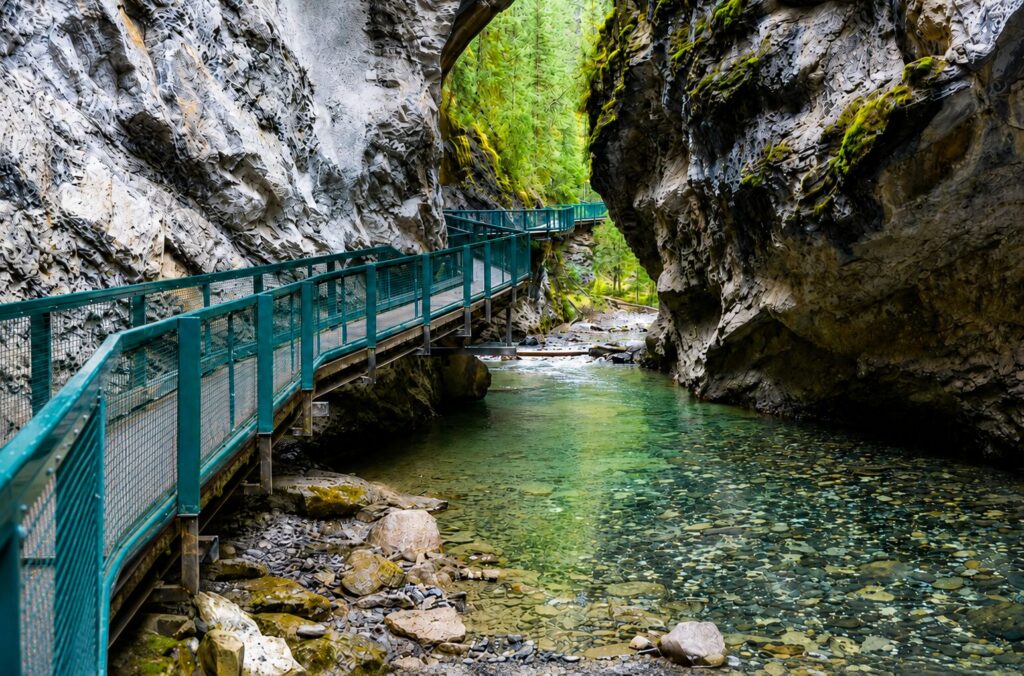
Johnston Canyon – Lower Falls (2.4 km round trip, catwalks along the canyon wall)
Lake Louise Lakeshore Trail (flat, paved-adjacent path along the lake)
Moderate
- Johnston Canyon – Upper Falls and Ink Pots (roughly 11.6 km round trip if you continue to the Ink Pots, about 330 m of elevation gain)
- Plain of Six Glaciers (roughly 13.8–14.2 km round trip from Lake Louise, with elevation gain reported between about 450 m and 590 m depending on the source and exact endpoint used — budget 4–5 hours)
- Larch Valley (about 7–9 km round trip from Moraine Lake to the edge of the valley, roughly 400–550 m gain; note this trail is famous for golden larch trees in late September, but the wildflowers and views make it worthwhile in summer too)
Difficult
- Sentinel Pass via Larch Valley (roughly 11–11.6 km round trip from Moraine Lake, with elevation gain commonly reported between about 725 m and 820 m depending on the exact route measured — a full alpine day)
- Sulphur Mountain Trail (5.5 km one way, about 655–700 m elevation gain, 1.5–3 hours up; many hikers ride the gondola down for a discounted one-way fare)
Trail Reference Table
| Trail | Distance | Elevation Gain | Duration | Difficulty | Trailhead | Permit Required |
| Johnston Canyon – Lower Falls | 2.4 km RT | ~30 m | 0.5–1 hr | Easy | Johnston Canyon parking, Bow Valley Parkway | No |
| Johnston Canyon – Upper Falls & Ink Pots | ~11.6 km RT | ~330 m | 3.5–4.5 hrs | Moderate | Johnston Canyon parking | No |
| Plain of Six Glaciers | ~13.8–14.2 km RT | ~450–590 m | 4–5 hrs | Moderate | Lake Louise Lakeshore (near Chateau) | No |
| Larch Valley | ~7–9 km RT | ~400–550 m | 3–4 hrs | Moderate | Moraine Lake (shuttle-only) | No, but group-of-4 advisory possible |
| Sentinel Pass via Larch Valley | ~11–11.6 km RT | ~725–820 m | 4.5–5.5 hrs | Difficult | Moraine Lake (shuttle-only) | No, but group-of-4 advisory possible |
| Sulphur Mountain Trail | 5.5 km one way | ~655–700 m | 1.5–3 hrs | Moderate–Difficult | Banff Upper Hot Springs parking | No |
Trail data is drawn from a range of hiking guides and cross-checked where possible against Parks Canada; treat the elevation and distance figures as close estimates and confirm current conditions and any active bear-related group-size advisories at a Banff or Lake Louise visitor centre before you set out.
Detailed hike breakdown: what each trail actually demands
Johnston Canyon (Lower and Upper Falls + Ink Pots) – Route type: Out-and-back on maintained catwalks and forest trail – Water: None on trail; fill up at the trailhead – Restrooms: At the trailhead parking area – Cell reception: Patchy to none past the Lower Falls – Main hazards: Slippery catwalks near spray zones, crowding-related bottlenecks – Recommended start: Before 8 a.m. — this is consistently the busiest trail in the park – Who should avoid it: Nobody, really — but expect crowds regardless of when you go
Plain of Six Glaciers – Route type: Out-and-back, starting along the Lake Louise Lakeshore Trail before climbing – Water: A refill station at the Lake Louise parking area; none on trail (the teahouse near the endpoint sells drinks seasonally, cash preferred) – Restrooms: At the trailhead only – Cell reception: Unreliable once you leave the lakeshore – Main hazards: Steady, sustained climbing; changeable alpine weather near the glacier viewpoint – Recommended start: 7–8 a.m. to beat both crowds and afternoon weather – Who should avoid it: Hikers not comfortable with several hours of sustained uphill walking
Larch Valley and Sentinel Pass – Route type: Out-and-back from Moraine Lake – Water: None on trail — carry what you need – Restrooms: At the Moraine Lake day-use area only – Cell reception: Little to none – Main hazards: This is active grizzly habitat; Parks Canada sometimes posts group-of-four (or more) travel advisories for this trail, and violating a mandatory restriction can carry penalties — check the trailhead board and Parks Canada bulletins before you go – Recommended start: Very early — the Moraine Lake shuttle and parking situation alone makes a late start impractical, and this is also a full alpine day – Who should avoid it (Sentinel Pass extension in particular): Hikers without prior experience on long, steep alpine terrain, or without proper layers for a cold, windy pass
Sulphur Mountain Trail – Route type: One-way uphill trail, typically paired with a one-way gondola descent – Water: None on trail – Restrooms: At the base (Upper Hot Springs) and summit gondola station – Cell reception: Improves toward the summit – Main hazards: Sustained switchback climbing; heat exposure on sunnier stretches – Recommended start: Morning, to avoid midday heat and to have time for the gondola summit facilities after – Who should avoid it: Hikers looking for a quick outing — budget the better part of a morning
A Realistic 5-Day Itinerary
This itinerary is organized geographically to avoid unnecessary backtracking. It assumes you’re based in or near Banff townsite and have a rental car.
Day 1 — Arrive and settle into Banff Fly into Calgary, pick up your rental car, and drive to Banff (allow about 2 hours with your park pass stop at the gate). Spend the afternoon walking Banff Avenue, Bow Falls, and Surprise Corner. Keep it light after a travel day.
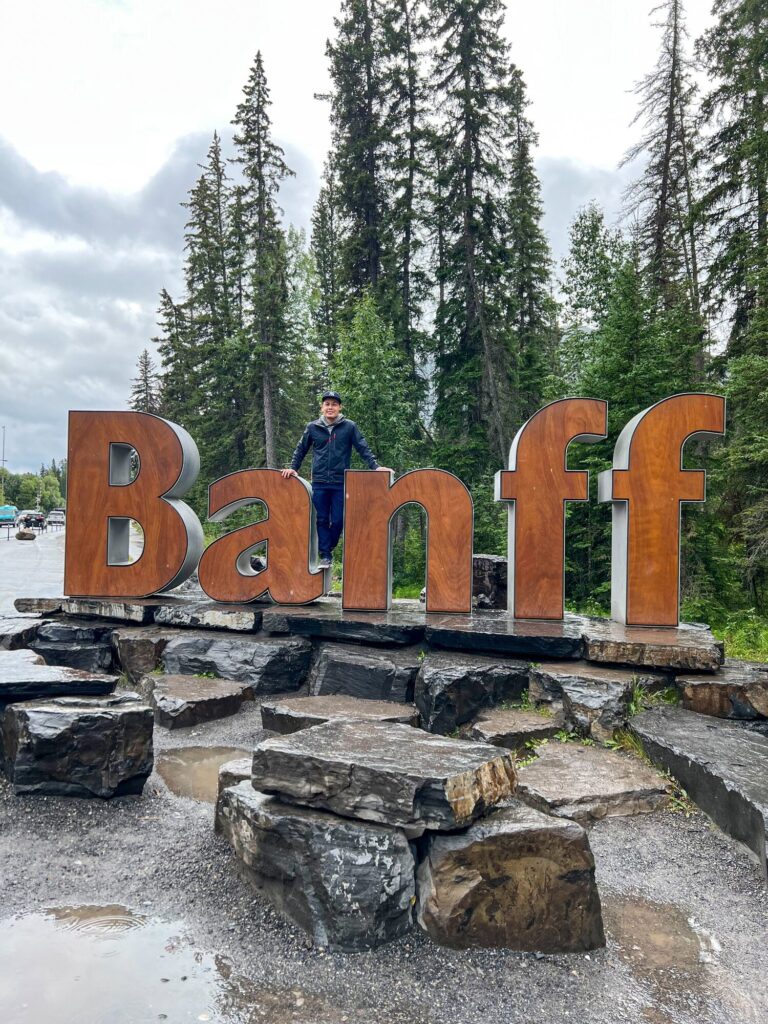
Day 2 — Banff townsite area Morning hike or gondola ride up Sulphur Mountain, followed by a soak at the Upper Hot Springs. Afternoon at Lake Minnewanka for an easy shoreline walk or boat cruise. This day stays entirely within a short drive of Banff, so there’s no long-distance driving.
Day 3 — Lake Louise Drive to Lake Louise early (or take the shuttle) to beat the parking crowds. Hike the Plain of Six Glaciers in the morning while the trail is coolest and least busy. Explore the Lake Louise shoreline and Chateau area in the afternoon before heading back to Banff.
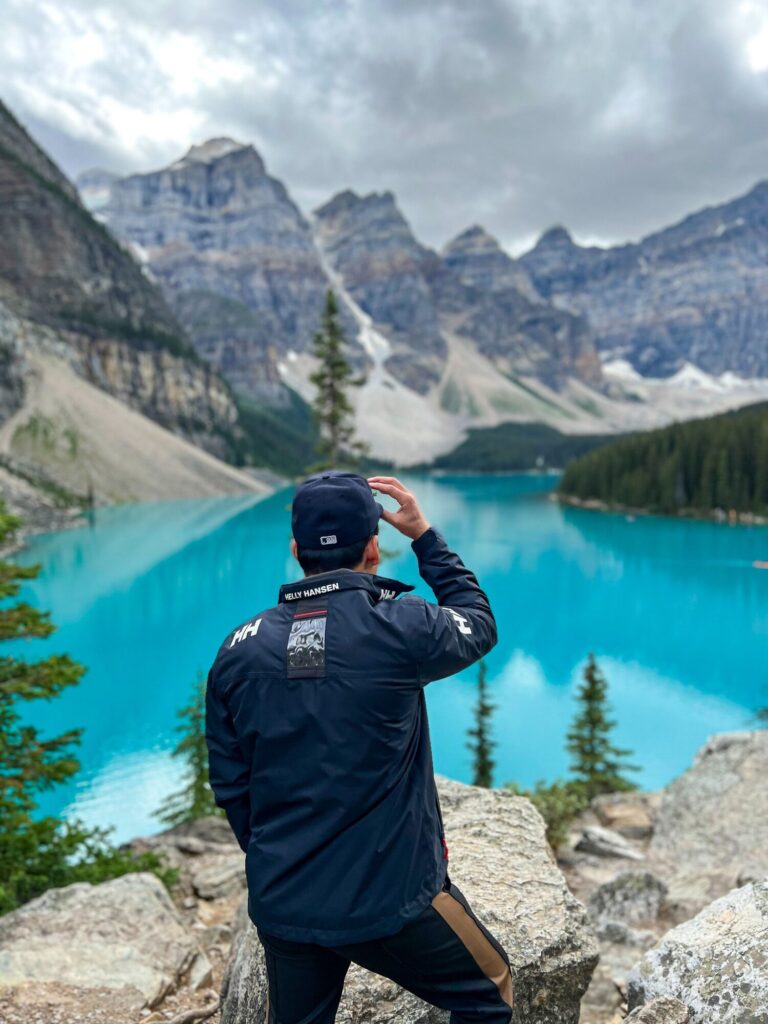
Day 4 — Moraine Lake Book the Moraine Lake shuttle for an early departure. Do the Rockpile Trail viewpoint first, then attempt Larch Valley (or Sentinel Pass, if you’re prepared for the full alpine day and any bear advisories in place). This is a demanding day — don’t stack it with additional driving.
Day 5 — Icefields Parkway day trip (or Bow Valley Parkway) If you have the stamina, drive north on the Icefields Parkway toward Bow Lake and Peyto Lake before turning back — this is a full day given the driving distance. If you’d rather stay closer, take the slower, more scenic Bow Valley Parkway and stop at Johnston Canyon on the way back toward Banff for your departure the next morning.
Don’t place Moraine Lake and the Icefields Parkway on the same day — they pull in opposite directions from Banff, and both deserve unhurried time.
Sunrise, Sunset and Photography Locations
- Sunrise: Moraine Lake’s Rockpile Trail and Lake Louise’s shoreline are both dramatically better — and far less crowded — at sunrise than any other time of day. This is also your best shot at calm, mirror-like water before wind picks up.
- Sunset: The Banff Gondola summit deck and Vermilion Lakes (just outside Banff townsite, easily reached by car) both offer strong sunset views over the Bow Valley.
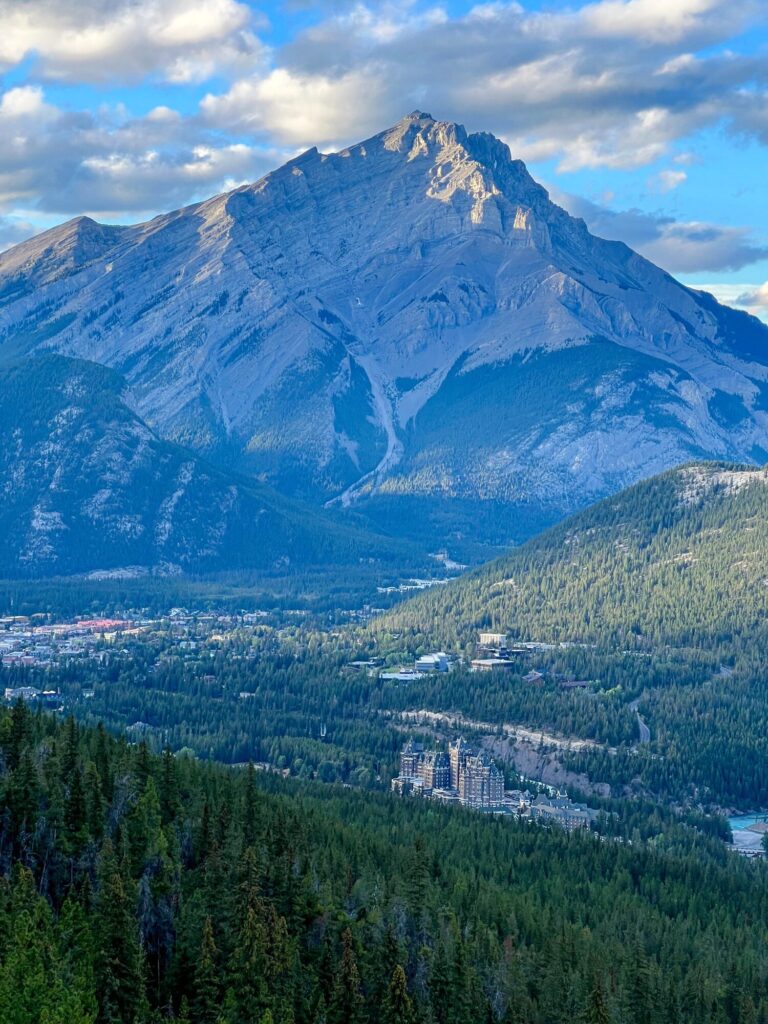
- Golden hour generally: Surprise Corner and the Bow Falls viewpoint work well in early morning or early evening light.
Wildlife and Safe Viewing Practices
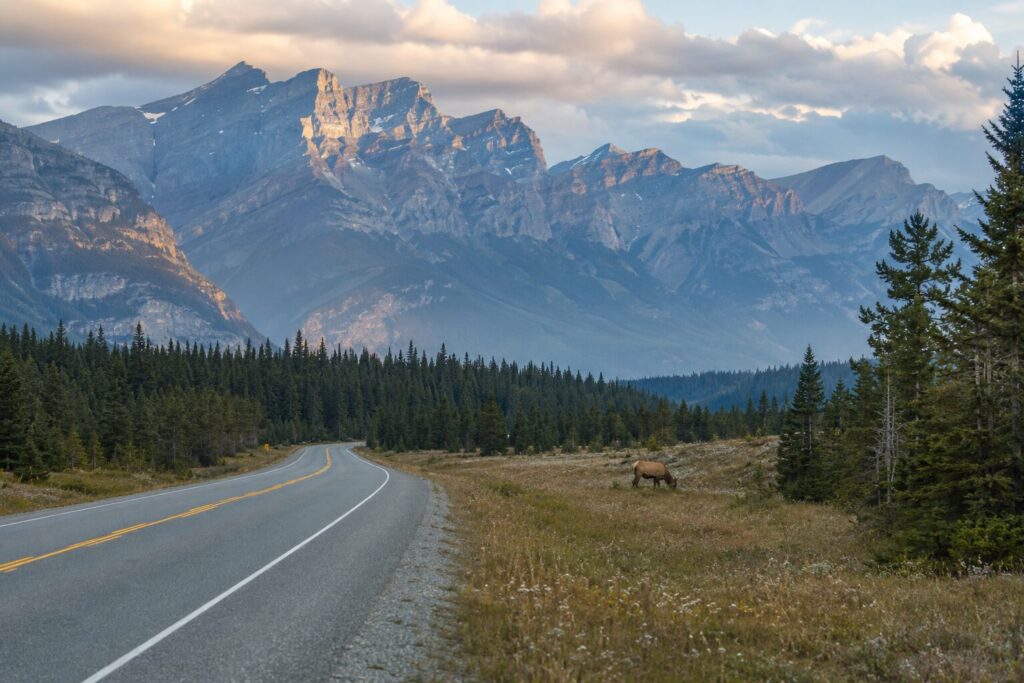
Banff is home to black bears, grizzly bears, elk, deer, wolves, cougars, and coyotes. Encounters are relatively common on trails, and Parks Canada periodically issues area-specific bear warnings and, occasionally, mandatory group-size restrictions on trails with high bear activity — Larch Valley and Sentinel Pass are two trails that have carried such advisories in past seasons.
Practical rules that apply throughout the park:
- Carry bear spray on every hike and know how to use it before you need it
- Make noise regularly, especially near blind corners, dense brush, or loud water where a bear might not hear you coming
- Hike in groups where possible — Parks Canada research shows incidents drop significantly for groups of four or more
- Never approach wildlife for a photo — this includes elk, which frequently wander through Banff townsite itself and can be dangerous, especially during calving season (spring) and rut (fall)
- Store all food, garbage, and scented items in your vehicle or a bear-resistant container — never in a tent — and note that approved bear-resistant food containers are mandatory for backcountry camping between April 1 and November 15
- Check the current bulletins page on the Parks Canada Banff website, or ask at a visitor centre, for active trail closures and warnings before you set out
- Elk and other wildlife also cross highways at dusk and after dark — drive slowly and stay alert if you’re on the road in the evening
If you encounter a bear at close range, do not run. Back away slowly while speaking in a calm voice, and use bear spray if the animal continues to approach.
Where to Stay
Inside the park:
- Banff townsite — the widest range of hotels, restaurants, and services, and the most practical base for a first visit
- Lake Louise village — smaller and quieter, useful if you want to prioritize early access to Lake Louise and Moraine Lake over Banff’s amenities
- In-park campgrounds (see below)
Outside the park:
- Canmore — just outside the park boundary, generally less expensive than Banff with a similar range of restaurants and services, about 20 minutes from the Banff townsite gate
Camping
Banff National Park has roughly 2,400 campsites across 14 campgrounds. Most are seasonal (mid-May to mid-October); Tunnel Mountain Village II runs year-round. Reservable campgrounds — Tunnel Mountain (Trailer Court, Village I, Village II), Two Jack Main, Two Jack Lakeside, Johnston Canyon, Lake Louise (hard- and soft-sided), Protection Mountain, Rampart Creek, and Silverhorn Creek — can be booked through the Parks Canada Reservation Service or by phone. For 2026, the main roadside-campground reservation window opened February 12, 2026, with a queue system in place given demand. Castle Mountain, Mosquito Creek, and Waterfowl Lakes campgrounds operate first-come, first-served.
Sample 2026 nightly fees (per site, not per person):
| Campground type | Fee |
| Unserviced, toilets only | $26.75 |
| Unserviced, toilets and showers | $34.00 |
| Electrical | $40.00 |
| Full serviced (water, sewer, electrical) | $47.25 |
| Primitive (Mosquito Creek, Rampart Creek, Silverhorn Creek) | $22.00 |
| oTENTik (equipped canvas cabin) | $147.50 |
A fire permit is required for campfires: $12.00/day at Banff-area campgrounds, $17.00/day at Lake Louise and Icefields Parkway campgrounds. Backcountry camping is $15 per person, per night, and requires a permit.
Food, Fuel, Water and Restroom Availability
Banff townsite and Lake Louise village both have grocery stores, restaurants, cafes, and gas stations. Once you’re on the Icefields Parkway or deep into the Bow Valley Parkway, services thin out fast — fuel up in Banff or Lake Louise before a Parkway day, and don’t count on cell service to find help if you run low.
Most major trailheads (Johnston Canyon, Lake Louise, Moraine Lake, Sulphur Mountain base) have restrooms and, in many cases, a place to refill water bottles. Once on trail, assume there’s no potable water source and carry at least 1–1.5 litres per person for a half-day hike, more for a full alpine day like Sentinel Pass.
Accessibility
Some of Banff’s most scenic spots are genuinely accessible: the Lake Louise Lakeshore path and the boardwalk sections of Johnston Canyon’s Lower Falls trail are relatively flat and can accommodate wheelchairs and strollers with assistance, though surfaces vary and steep sections exist beyond the first stretches. The Banff Gondola summit has an accessible boardwalk and viewing deck. Most backcountry and alpine trails — including everything in the “moderate” and “difficult” categories in this guide — are not wheelchair accessible due to elevation gain, narrow switchbacks, and natural terrain.
Visitors with valid, government-issued accessible parking placards are among the few groups permitted to drive personal vehicles on Moraine Lake Road — confirm current provisions directly with Parks Canada before relying on this.
Weather, Altitude and Major Safety Hazards
Banff townsite sits at roughly 1,400 m elevation, and many trail endpoints climb well above 2,000 m, so mild altitude effects (shortness of breath, faster fatigue) are common for visitors arriving from sea level, even though this isn’t extreme altitude. Mountain weather changes quickly: clear mornings can turn into afternoon thunderstorms, and temperatures at higher elevations (like the Banff Gondola summit or Sentinel Pass) run noticeably colder and windier than the valley floor — often 10–15°C cooler.
Other hazards to plan around: – Fast-moving, cold glacial rivers and creeks — don’t attempt to cross or swim in fast water – Sun exposure at elevation, even on cool or overcast days – Sudden weather changes on exposed alpine sections like Sentinel Pass – Wildlife, as detailed above – Wildfire smoke, which can affect the region in some summers — check air quality advisories if you have respiratory concerns
What to Pack
- Layers, including a waterproof/windproof shell — even in July, alpine passes can be cold
- Sturdy hiking shoes or boots with grip for uneven, sometimes wet trail surfaces
- Bear spray (purchase locally in Banff or Canmore rather than trying to fly with it)
- Reusable water bottles or a hydration reservoir
- Sun protection: hat, sunglasses, sunscreen
- A paper map or offline map download — cell coverage is unreliable on most trails
- Cash for teahouses and smaller vendors that may not take cards
Leave No Trace and Responsible Travel
- Stay on marked trails, especially in ecologically sensitive areas like Johnston Canyon and alpine meadows such as Larch Valley
- Pack out all garbage, including food scraps and peels
- Don’t feed wildlife — it’s both illegal and dangerous for the animals
- Respect trail closures and bear advisories, which exist for your safety and the animals’ undisturbed access to habitat
- Keep dogs leashed where required, and check individual trail rules, since not all trails or shuttles accept pets
Common Mistakes to Avoid
- Assuming you can drive to Moraine Lake — you can’t, and there’s no walk-up shuttle ticket
- Arriving at Lake Louise after 7 a.m. expecting to find parking
- Booking a Moraine Lake shuttle and an Icefields Parkway drive for the same day
- Skipping a park pass because you assume entry is always free — the Canada Strong Pass free window is time-limited (June 19–Sept 7, 2026)
- Hiking Sentinel Pass without checking for an active bear group-size advisory
- Underestimating how much colder and windier the alpine sections get compared to the valley floor
- Not booking campsites or shuttle reservations far enough in advance — both sell out
Frequently Asked Questions
Do I need a park pass to visit Banff in summer 2026? Not between June 19 and September 7, 2026 — admission is free under the Canada Strong Pass initiative. Outside that window, a daily pass or Discovery Pass is required.
Can I drive to Moraine Lake? No. Moraine Lake Road is closed to private vehicles. Use the Parks Canada shuttle, Roam Transit’s connecting service, a licensed tour operator, or a bicycle.
Do I need to book the Lake Louise/Moraine Lake shuttle in advance? Yes. Reservations open in mid-April for the summer season, and walk-up seats generally aren’t available.
Is Banff safe for solo travelers? Yes, in terms of crime — Banff is considered very safe. The bigger safety consideration is wildlife awareness on trails and driving caution around elk and other animals near dusk.
What’s the best hike for a first-timer? Johnston Canyon to the Upper Falls is a good moderate introduction; Plain of Six Glaciers is the step up for a full-day alpine hike without requiring the Moraine Lake shuttle logistics.
Are there halal food options in Banff or Canmore? There’s no certified fully-halal restaurant in Banff townsite as of this writing, but several restaurants — including Banff Shawarma and the Balkan Restaurant — are commonly cited by Muslim travelers for halal meat options, and it’s worth confirming directly with the restaurant. In Canmore, options are more limited; the Bow Valley Muslim Association serves the Banff–Canmore Muslim community and can be a useful resource for current prayer facility information. Always verify halal status directly with each restaurant, since availability changes.
A Balanced Conclusion
Banff National Park delivers on its reputation, but a good trip here depends more on logistics than most national parks — reservations, early starts, and knowing which roads you simply can’t drive. Plan around the shuttle system and crowd patterns rather than fighting them, and you’ll spend your time on the trail instead of in a parking line. It’s not a park that rewards spontaneity in peak summer, but it rewards preparation generously.
Park conditions, fees, reservations and closures can change. Confirm current information with the official park authority before your visit.
Ready to start building your Banff itinerary? Drop your questions in the comments—we’re always happy to help fellow travelers plan their trip.